Live project
Kiveton Park Industrial Estate

Project overview
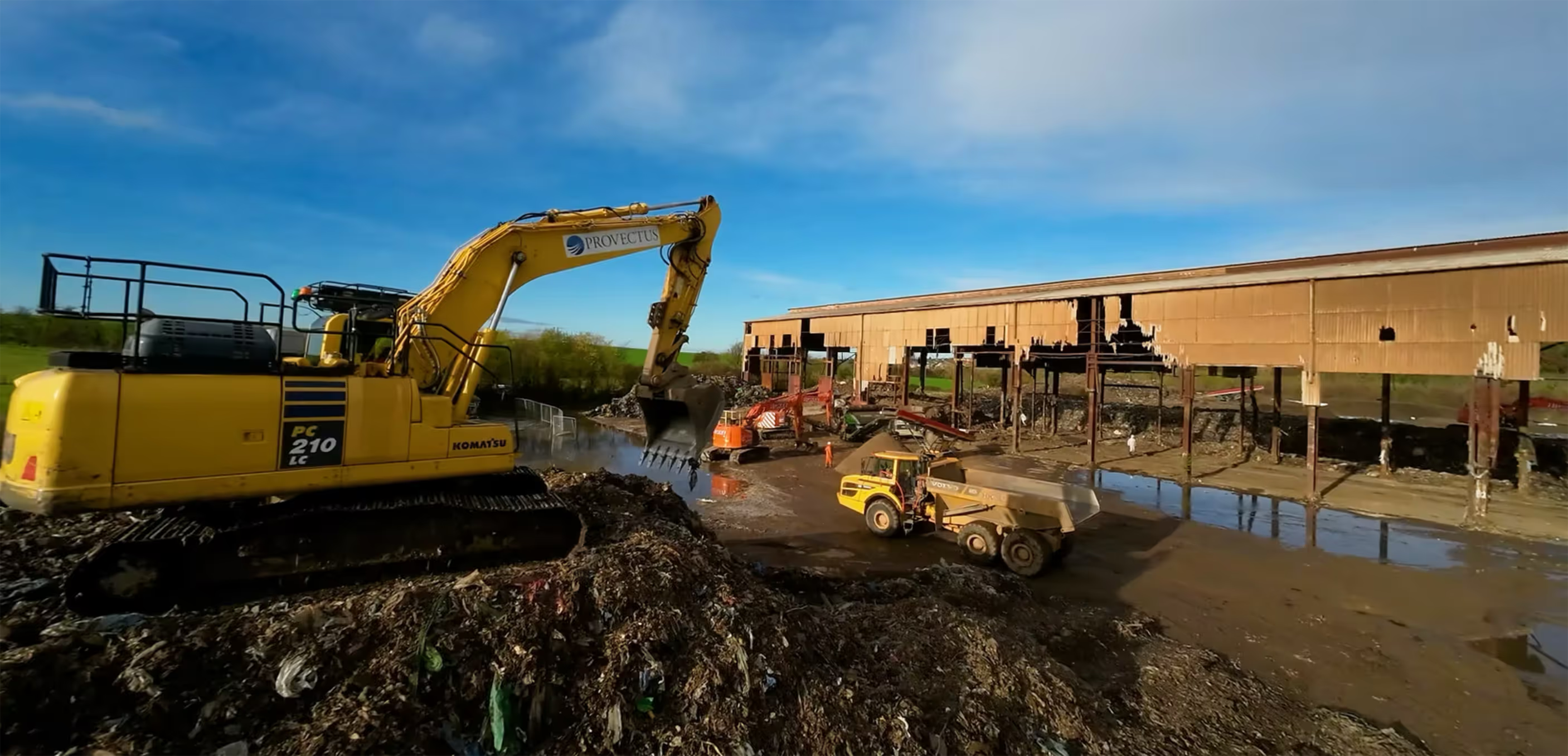
The Kiveton Regeneration Project is focused on transforming the former Kiveton Park Industrial Estate into a safe and future-ready site.
The site has historically faced environmental challenges due to legacy waste issues and multiple industrial fires. To address these challenges, waste processing and remediation works are being carried out by Provectus Remediation Ltd supported by technical experts Waste Conquered.
Our aim is to process, classify and responsibly dispose of the significant stockpiles of waste material currently on site. Through innovative techniques and close environmental oversight, we are working to regenerate the land and enable future positive use.
Where are we now?
Last updated:
January 2026
We have commenced work for the start of 2026, with export and site preparation activities underway today. Our focus is on preparing the site for the final stage of processing, which includes the upcoming lime addition process to condition material in preparation for final segregation and export.
These preparatory activities ensure that plant, access routes, stockpile areas, and safety controls are fully established ahead of this key phase. As always, all work is being conducted under our permitted environmental controls with attention to safety, dust management, and community impact.
Further project updates will be shared as processing progresses.
We are pleased to confirm that processing operations at the Kiveton site are now complete. This marks a significant milestone in the project and brings us into the final stages of material export, documentation, and site close-out.
To keep the community and stakeholders informed, the project page will be updated on a monthly basis with progress, export figures, and key activities as we work through the final disposal, compliance reporting, and site reinstatement processes.
Thank you for your ongoing interest in this project.

Precommencement stage: Permit Deployment & Regulatory Engagement
Progressing Safely and Compliantly at Kiveton
We’re pleased to share an update on the early stages of the Kiveton Regeneration project, where key preparatory work has now begun to enable the safe and compliant processing of waste materials on site.
One of the first major milestones in this project has been the deployment of the mobile treatment permit, allowing Provectus Remediation to begin the processing of waste stockpiles under strict environmental standards. This permit is issued and regulated by the Environment Agency (EA) and is essential for carrying out the on-site treatment of materials, including the segregation and classification of mixed waste.
Our team has been in close contact with the EA throughout the mobilisation process, sharing our approach, documentation, and control measures to ensure the work aligns fully with regulatory expectations. The open dialogue with the regulator has allowed for a collaborative and transparent start to the works, with a strong focus on environmental protection and best practice.
Work now begins on carefully constructing and managing the stockpile areas, implementing dust and water controls, and deploying hand-picking and screening techniques to remove visible contamination such as plastics and asbestos-containing materials. The joint venture team is also working to establish clear reporting lines, daily checks, and operational controls to always keep the site safe and well-managed.
This early phase is a vital part of a longer journey towards regenerating this important site, and we’re proud to be approaching it with professionalism, care, and technical rigour.
Stay tuned for further updates as the project progresses!
Weeks 0 - 5: Offsite Preparation Summary
In advance of site mobilisation scheduled for 07 July 2025, Provectus is undertaking a coordinated programme of offsite preparation to ensure a smooth and efficient start to operations. Key activities include:
Deployment and configuration of the Mobile Treatment Permit, including notification to the Environment Agency and confirmation of waste types covered.
Preparation of plant and equipment, including screening units, selector grabs, and weighbridge systems.
Procurement and scheduling of disposal outlets, aligned with anticipated waste classifications from early-stage stockpiles.
Staff resourcing and briefings, including inductions, site-specific method statements, and health & safety protocols.
Development of site documentation, including tracking templates, duty-of-care forms, and reporting structures.
Stakeholder coordination, ensuring all early programme interfaces (e.g. compound setup, welfare, traffic routes) are confirmed and sequenced.
This preparatory phase is focused on ensuring regulatory compliance, operational readiness, and minimal delay on site commencement.
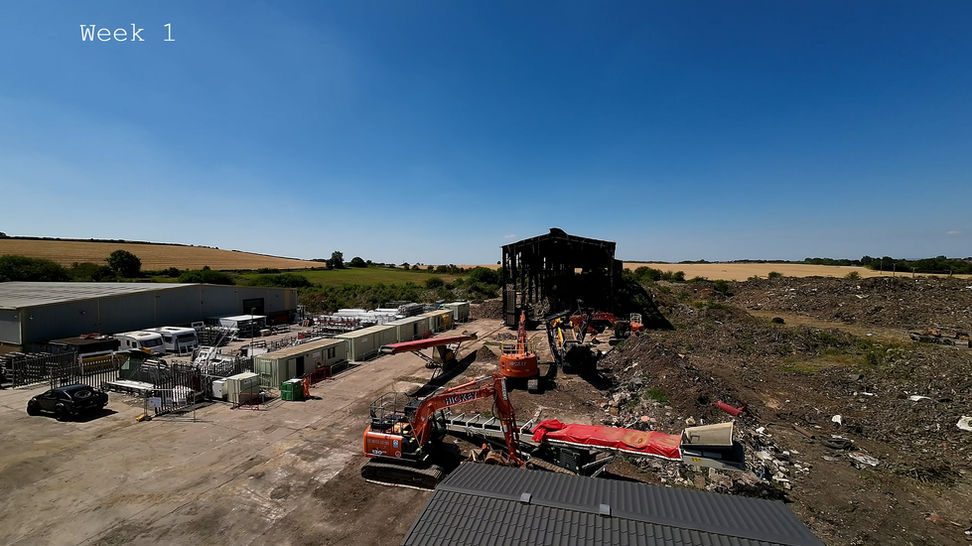
The first week on site has focused on establishing safe and efficient working conditions, with key setup activities including:
Installation of welfare facilities and initial site compound setup
Delivery and positioning of plant and machinery, including screening and handling equipment
Clearance of vegetation and foliage from stockpiles to prepare for processing
Trial run completed on Stockpiles, allowing for initial assessment of material composition and process flow
Commencement of asbestos handpicking, supported by trained operatives and appropriate control measures
A strong foundation has been laid for full-scale processing operations to begin in Week 2
During the second week on site, progress advanced on several key fronts:
Expanded plant mobilisation
Additional plant arrived including an ADT dumper, a 13 t 360° excavator, dedicated asbestos skip, and support vehicles for Tyres and incoming waste materials.
Stockpile processing commenced
Stockpiles N, O, J, and I were opened and material began passing through the segregation process.
Initial sampling completed:
The first round of representative samples from processed stockpiles has been dispatch for lab testing, ensuring compliance with WM3 classification requirements.
Ongoing asbestos handpicking
Trained operatives continued manual asbestos removal across the site, targeting both opened and unopened areas.
Final vegetation clearance
All remaining stockpiles have been cleared of surface foliage, preparing them for the next stages of processing.
Weighbridge installation completed
The onsite weighbridge is now fully installed and operational, facilitating accurate, auditable tracking of all outgoing waste.
Site access improvements
Clearing and equipment deployment have strengthened site logistics, enabling continuous progress through the selected stockpiles.
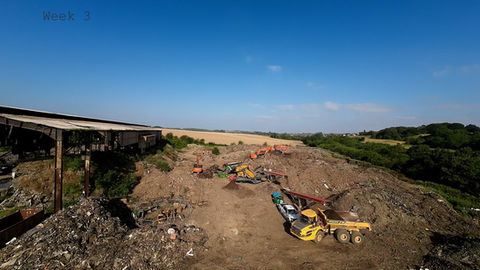
During Week 3, key milestones were reached in waste processing and site infrastructure enhancements:
Processing Commenced on Stockpile D
Stockpile D was fully mobilised and integrated into the segregation process alongside earlier material from stockpiles I, J, and P.
Ongoing Sampling and Testing
Continued dispatch of representative samples from stockpiles I, J, P, and D for WM3-compliant classification and disposal route determination.
Water Tank Installation Completed
A dedicated water tank is now installed and fully operational, supporting both dust suppression and fire protection systems. This ensures compliance with environmental permit management and provides essential resource support across the operational footprint.
Enhanced Dust Control Measures
With the new water supply infrastructure in place, dust suppression management—including bowser delivery, mist sprays, and water cannon systems—is now in full effect, in line with best practice and regulatory guidance such as the Environment Agency’s recommendations for dust control systems
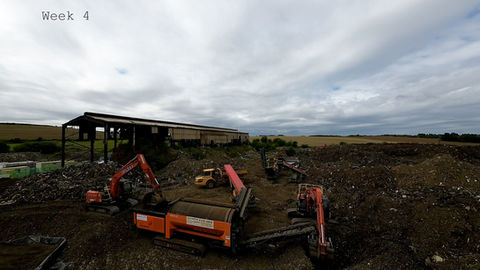
During Week 4, the team delivered strong processing momentum and enhanced technical refinement:
Sampling stockpile D continued to feed compliance protocols, ensuring accurate WM3-compliant classification.
Stockpile D is now 60% processed, with the remaining material undergoing active segregation and refinement.
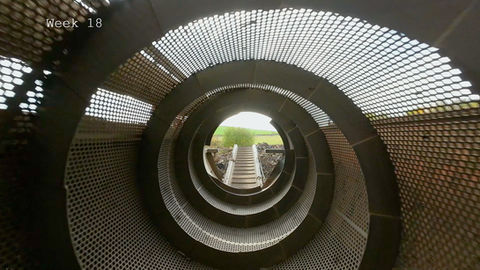
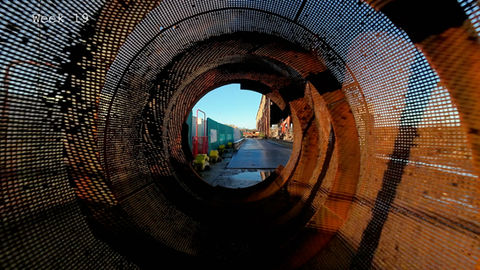
Introduction of a new trommel significantly enhanced waste processing efficiency: a 10 m drum trommel has been deployed to re-screen the midsize fraction from Stockpile D, reducing residual soil fines and improving waste categorisation.
Mechanical size separation:
The rotating drum separates fine particles through perforated mesh, enabling cleaner fines recovery while discharging oversized material to the appropriate waste stream
Enhanced throughput and yield:
Rommels process material continuously and gently, making them well-suited for moist or mixed-content feeds and enabling higher efficiency than flat deck screens
Material value recovery:
The refined midsize stream improves classification accuracy, reduces contamination risk, and supports a cleaner final product going to disposal or reuse
Week 5 continued building on the strong foundations of the previous weeks, delivering enhanced throughput, improved waste refinement, and the first outbound waste movements:
Stockpile D Progress – 80% Complete
Steady momentum has carried Stockpile D to an 80% completion stage, with processing efforts focused on both refinement and dispatch.
Refinement with 12 mm Trommel Drum
Clarification was provided (and accepted)—the trommel drum installed is a 12 mm unit, not the previously mentioned 10 mm. This upgrade ensures even finer separation, reducing residual soil content effectively.
First Waste Exports – Non-Hazardous Oversize
A significant operational milestone: the first four loads of non-hazardous oversize material from Stockpile D have been exported using artic (articulated) vehicles. The new on-site kit—JCB JS20MH with a grab attachment—enabled efficient loading and transportation.
Interpretation & Impact
The 12 mm trommel provides granular precision in sorting, helping deliver cleaner waste streams with higher reuse and disposal confidence.
Exporting the initial non-hazardous oversize material signals the shift from processing to logistics—mobilisation of disposal capacity is now in motion.
Utilising efficient plant such as the JCB JS20MH shows our focus on adapting kit to intricate waste handling needs—fast, reliable, and safe.
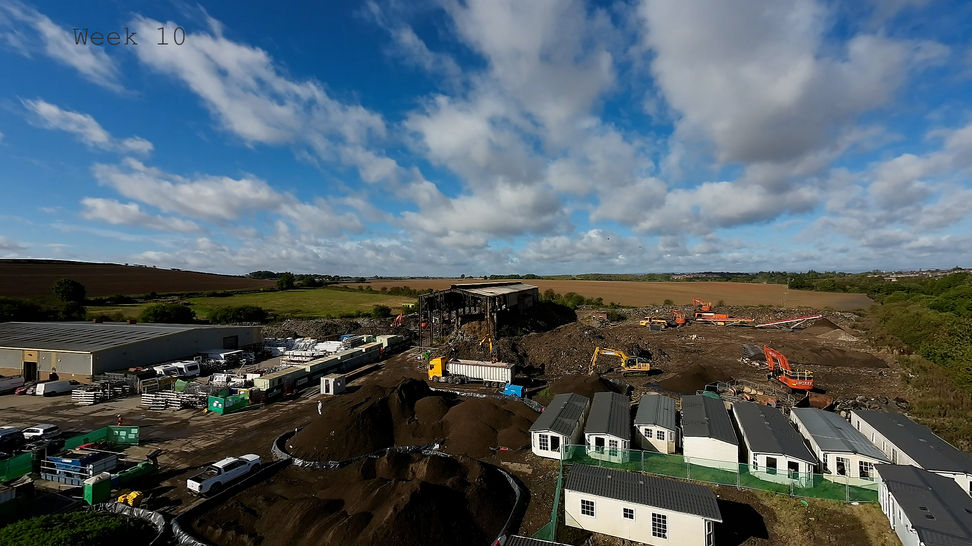
Weeks 6 - 10
This week, the Kiveton site continued to build on our progress with high levels of productivity, operational transition, and regulatory engagement:
Stockpile D Now 95% Processed
The focused segregation efforts have brought Stockpile D to 95% completion—a strong step toward wrapping up this zone.
Ongoing Exports of Non-Hazardous Material
Export operations continue smoothly as non-hazardous oversize material from Stockpile D is being dispatched consistently.
Pre-Mobilisation Prep for Stockpile E
Site activities now include preparations to mobilise and process Stockpile E—clearing, setup, and logistics readying are underway.
Environmental Agency On-Site Audit Conducted
The Environment Agency completed an on-site audit, reviewing our processes and compliance with regulatory standards.
This week saw further operational advancements and site improvements as processing continues with enhanced precision and readiness for increased throughput. Here’s what was achieved:
Mid-size Fraction Reprocessed with 12 mm Trommel
Stockpile J mid-size material has now been reprocessed using our 12 mm trommel drum. This fine-grade screening significantly reduces residual soil content—boosting classification accuracy and downstream processing efficiency (trommel screens are highly effective for material separation and waste refinement)
New Articulated Weighbridge Installed
The arctic weighbridge has been installed and is currently undergoing calibration to ensure precise weighing for each load. Proper calibration involves test weights, adjustment of scale settings, and verification to meet required accuracy tolerances
Stockpile D Segregation Advancing
Processing of Stockpile D continues apace. The oversize and fines fractions are being effectively separated and neatly stockpiled in preparation for export—streamlining logistics and facilitating accurate tracking.
During the second week on site, progress advanced on several key fronts:
Stockpile D Fully Processed
Processing of Stockpile D has now been completed, marking a significant milestone toward wrapping up this phase of the project.
Commenced Processing of Stockpile E
Operations have transitioned seamlessly into Stockpile E, initiating segregation and assessment activities for the next zone.
Enhanced Trommel Agitation with Baffles
Baffles have been installed within the 65 mm trommel to boost internal agitation. This modification increases the tumbling action of materials, enhancing separation efficiency by promoting more fines to pass through the mesh - resulting in cleaner segregation and improved material quality. Trommel screens are widely regarded for their efficiency in separation, especially in mixed and moist waste streams, and such enhancements deepen their effectiveness.
Weighbridge Calibration Completed and Now Operational
The newly installed weighbridge has successfully undergone full calibration and is now fully operational. Calibration involves applying certified test weights, verifying accurate load cell performance across the platform, making necessary adjustments, and documenting outcomes This milestone ensures that all weight data going forward is accurate, reliable, and compliant with regulatory standards.
Stockpile E Processing – 95% Complete
We continue to maintain strong throughput, with Stockpile E now nearing full processing completion.
South Site Cleared for Stockpile Q
Ground preparation and vegetation clearance in the south of the site are complete, paving the way for mobilisation and processing of Stockpile Q in Week 10.
New 20 mm Trommel Drum Deployed
The Terex 65 mm trommel drum has been replaced with a new 20 mm unit, enhancing fines recovery and enabling finer material separation.
Dual Trommel Operation Enabled
By splitting tasks between the two trommels ("gangs"), we have significantly increased site capacity—boosting overall throughput while maintaining segregation quality.
Improved Trommel Performance
The 65 mm trommel has been replaced by a 20 mm drum, yielding much better separation of waste streams. The finer drum is helping to increase the proportion of material correctly classified as fines vs oversize.
Dual-Gang Trommel Operation Fully Deployed
With the 20 mm trommel in place, the site is now operating two “gangs” (i.e. two parallel segmentation paths), enabling higher throughput while retaining the quality of segregation.
Stockpile Processing Updates
Stockpile E: Completed processing.
Stockpile G: Started and completed this week.
Stockpile C: Processing begun with Gang 1.
Stockpile Q: Processing begun with Gang 2.
Exports Continue
Oversize material continues to be exported regularly, utilising the refined segregation from the enhanced trommel process.
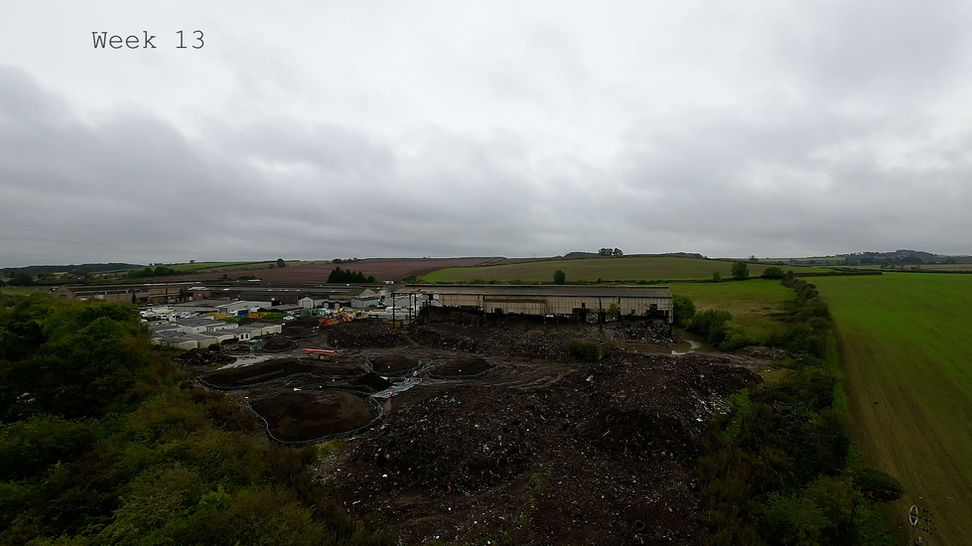
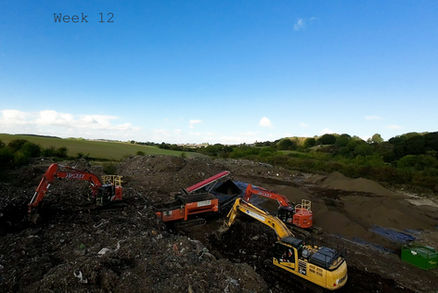
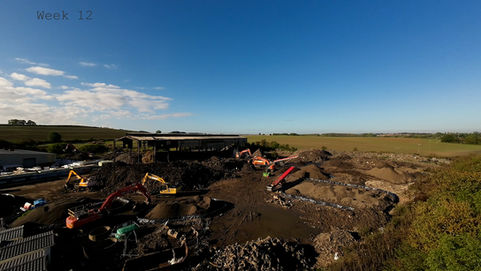
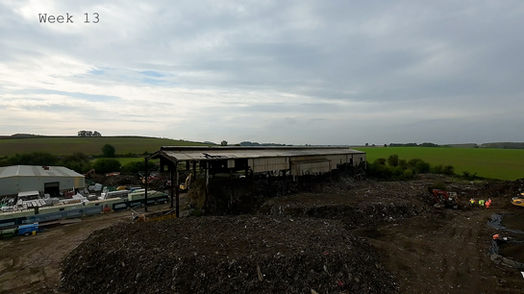
Weeks 11 - 15
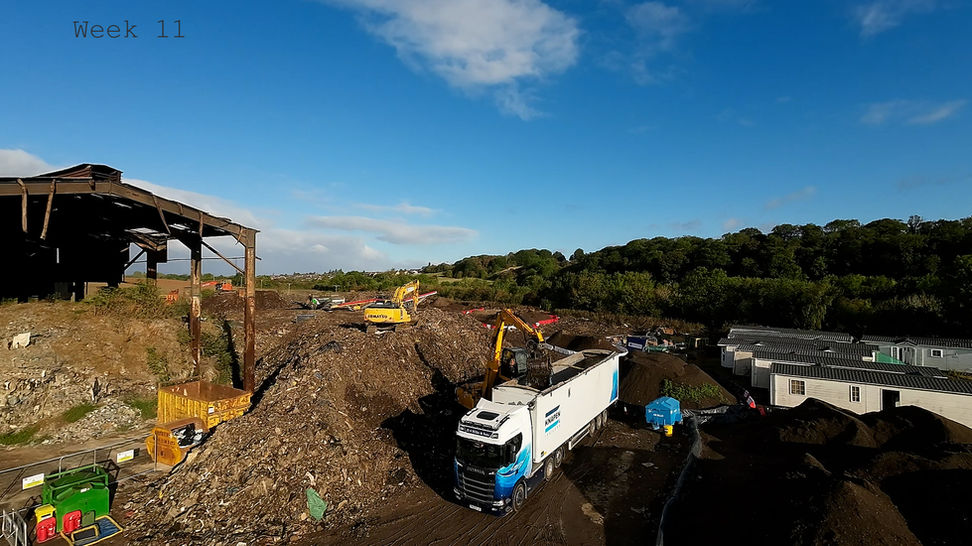
Continued processing of Stockpile C
Work remains in full flow on Stockpile C, with ongoing segregation and separation tasks.
Stockpile Q completed
Processing of Stockpile Q has now been fully completed.
Stockpiles R & S processed
Both Stockpile R and Stockpile S were started and completed this week, moving us steadily through the waste body.
Begun processing Stockpile T
The team has mobilised on Stockpile T, commencing segregation and sorting.
Preparation for Stockpile K1 underway
Infrastructure, clearing, and setup works are in progress to ready Stockpile K1 for full processing.
Continued exports of oversize (EWC 19 12 12)
Oversize material classified under EWC Code 19 12 12 continues to be exported regularly. This code covers “other wastes (including mixtures of materials) from mechanical treatment of wastes other than those mentioned in 19 12 11”, which in this case is the non-hazardous oversize material.
Ongoing asbestos handpicking
Trained operatives continue to manually pick asbestos across relevant stockpiles.
Weekly Activities & Milestones
Continued processing of Stockpile C, maintaining segregation momentum and throughput.
Stockpiles T & U have been fully processed this week, advancing the programme significantly.
Processing initiated on Stockpiles S & K1, with infrastructure, sorting, and material movement underway.
Continued exports of oversize (EWC 19 12 12)Oversize material classified under EWC Code 19 12 12 continues to be exported regularly. This code covers “other wastes (including mixtures of materials) from mechanical treatment of wastes other than those mentioned in 19 12 11”, which in this case is the non-hazardous oversize material.
This week also featured a site visit by the Environment Agency (EA) and representatives from the local council, reflecting growing oversight and stakeholder interest. Key points from the visit:
Continued processing of Stockpiles K1 & S, maintaining throughput and segmentation efforts.
Stockpile R was processed fully—commenced and completed within the week.
Oversize export operations stepped up, with an increased load count indicating acceleration in logistics and dispatch.
Regulatory review and assurance
The EA auditors and local authority inspected our segregation lines, plant operation and waste export workflows.
Dialogue and feedback session
We held an onsite briefing for the visitors, walked them through our process chain, answered technical queries, and shared recent data. Their focus was not only on what has been done so far but also on our future schedule, controls, and proposed mitigation measures.
Forward-looking planning and expectations
During the visit we discussed key upcoming milestones - completing remaining stockpiles, optimising export logistics, and validating final classification workflows. We used the occasion to demonstrate our path to project completion and reinforce commitments to compliance, stakeholder liaison, and transparency.
Stockpile S Completed
All processing work on Stockpile S has now been completed, bringing that zone to closure.
Continued Exports – EWC 19 12 12 (Oversize)
The dispatch of non-hazardous oversize material has continued through the week, maintaining export momentum and keeping downstream logistics active.
Ongoing Asbestos Picking
Handpicking operations for asbestos remain ongoing, ensuring that residual or hidden material is removed and managed as required.
Overall Processing Milestone – 57% Complete
Across all stockpiles, the project now stands at 57% completion, based on cumulative waste volumes processed to date.
Stockpiles L & M
Both L and M were started and completed within this week, further extending our processed coverage.
Stockpile S
Confirmed as fully processed, wrapping up that zone.
Stockpile C
Continued processing and segregation operations remain in focus—this is one of our larger, more complex stockpiles
Southern Zone
All works in the southern area of the site are now complete, freeing resources to focus on the remaining northern and central zones.
Overall Completion
The site-wide processing stage has now reached ~60 % completion—over half of the legacy waste volume has been processed, segregated, and managed under our operational plan.
Weeks 16 - 22
Continued processing of Stockpile C, maintaining throughput and segregation precision.
Stockpile Q was completed (as per previous week), enabling focus to shift fully to the new zones.
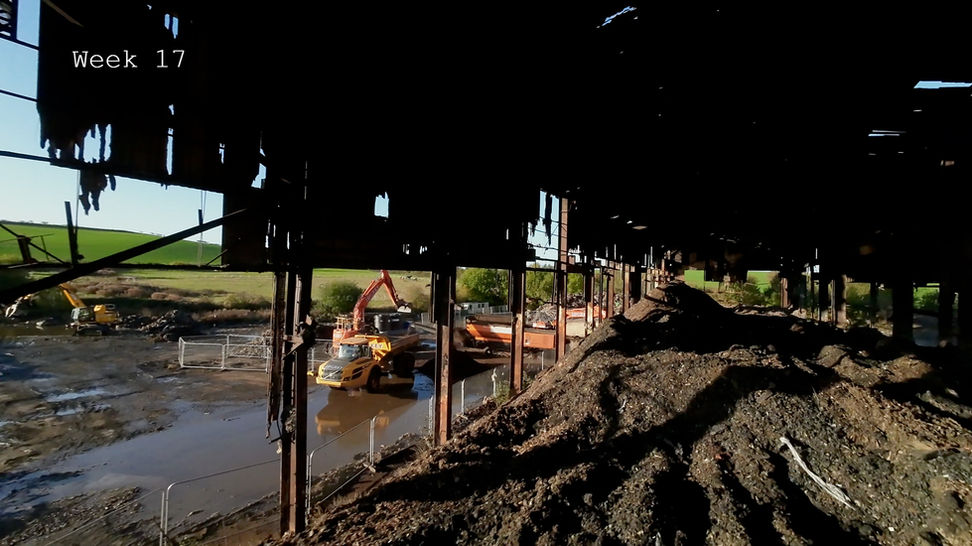
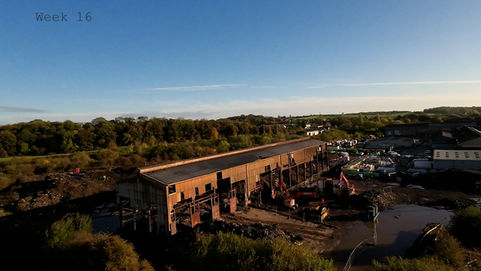
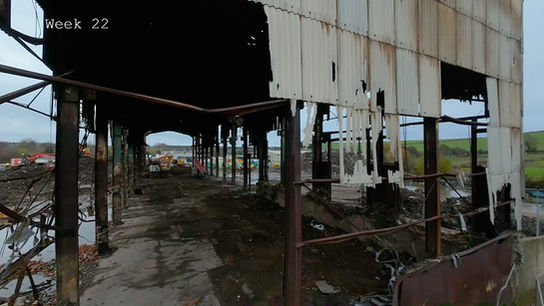
Commenced processing of Stockpile B and Stockpile K2 - notably, Stockpile K2 is located within the fire-damaged structure, requiring additional safety controls, specialist handling and structural considerations during our works.
Continued manual asbestos-picking operations across the active zones, ensuring hidden or legacy materials are removed early and safely
Total site processing progress now stands at 62% complete of the legacy waste volume.
The initiation of Stockpiles B and K2 marks a key phase in the northern/central zone mobilisation - plant and segregation systems are now fully bedded in and transitioning to higher-volume throughput. The inclusion of K2, being inside the fire-damaged structure, elevates focus on structural integrity, controlled access, and enhanced contaminant risk management.
The ongoing asbestos remediation work continues to underpin our compliance and safety envelope, ensuring all processed material remains appropriate for classification and disposal.
With 62% of the waste processed, we are moving into the “second half” of the programme - this enables sharpened scheduling for remaining stockpiles, export projections and final close-out strategy.
Upcoming focus: ramping processing on B & K2, driving export logistics from the oversize stockpile, finalising classification of mids/fines, and preparing for the final tranche of stockpiles.
Continued processing of Stockpile K2, including ongoing segregation of materials within the fire-damaged structure zone.
Ongoing asbestos hand-picking operations remain in place, ensuring hidden contaminants are removed before further processing.
Continued export of EWC 19 12 12 oversize material, maintaining outbound logistics and clearance of segregated stockpiles.
Site-wide processing percentage now stands at 65% complete.
Finalise the processing of Stockpile K2 and prepare for the next stockpile zone mobilisation.
Maintain export momentum to avoid backlog of oversize material and support workflow efficiency.
Ensure asbestos removal remains ahead of the mechanical segregation to safeguard quality and compliance.
Update the programme to reflect the 65% threshold and refine projections for remaining works.
Continued processing of Stockpile K2, including the active zone inside the fire-damaged structure.
Ongoing asbestos-picking operations, ensuring manual removal of suspected fibrous materials in tandem with mechanical processing.
Site-wide processing is now at 69% complete.
The continued focus on K2 is crucial as it presents unique structural and contamination challenges; it’s good to see the site maintaining momentum despite the complexity.
The asbestos-picking remains a key control measure underpinning regulatory compliance and safeguarding downstream classification.
Reaching nearly 70% progress signals a strong midpoint milestone: it’s a good point to review logistics, export handling, plant uptime, and strategy to completion.
Continued processing of Stockpile K2, remaining within the fire-damaged structural zone and requiring careful sequencing and plant deployment.
Arrival of additional machinery for the second gang to mobilise; this is in preparation to commence processing of Stockpile K1 next week, enabling two parallel workstreams and enhancing throughput.
Ongoing asbestos-picking operations across active zones, maintaining our contamination control and regulatory compliance.
Continuous export of non-hazardous oversize material (EWC code 19 12 12) is keeping the logistics chain flowing.
Site-wide processing completion is now at ~76%, signalling strong progress into the final phases of the programme.
With K2 nearly complete and K1 mobilisation imminent, the transition into the northern zone is consolidating our programme flow.
The additional gang of machinery offers flexibility and boosts capacity; by running two processing trains in parallel, we are poised to maintain high daily throughput while still maintaining stringent segregation and classification controls
Reaching the 76% milestone positions the project firmly in the final stretch; refining the remaining 24% will focus on optimisation of plant, export logistics, and finishing the toughest stockpiles.
Start of Stockpile K1 processing; expectation is that second gang will support K1 while the first gang potentially closes out K2 or supports oversize export staging. The team will also look to maintain asbestos removal pace and keep export volume steady.
Continued processing of Stockpile K2
The key zone within the fire-damaged structure remains in active operation.
The 2nd Gang has now commenced processing of Stockpile K1, giving us dual parallel processing streams.
With both gangs in full operation, we are now routinely achieving processing rates of 400-500 m³ per day, reflecting a strong upward swing in throughput.
Ongoing asbestos picking continues across active stockpiles to ensure hidden contaminants are removed ahead of mechanical processing.
Total site processing completion is now at 80%, a major milestone signalling the project is firmly in its final phase.
This week’s progress keeps the project on track toward completion - with over four-fifths of material processed. As we move deeper into the final phase, the focus will be on:
Continued processing of Stockpiles K1 & K2 using both gangs, maintaining high throughput and progressing core segregation works.
Ongoing asbestos picking across active zones remains in place to ensure contaminant removal and compliance before further processing.
Export of non-hazardous oversize material continues steadily, keeping logistics and clearance flows active.
Overall site processing progress now stands at 84 % complete of total waste volumes.
Completing the remaining stockpiles in a controlled, compliant manner
Maintaining consistent asbestos-picking and segregation discipline
Ensuring export logistics handle the ongoing oversize waste without backlog
Preparing final classification, documentation, and reporting ahead of project close-out
With the project now at ~93% completion, we propose the following next steps to transition smoothly into off-site disposal and final close-out:
Continued processing of Stockpile K1, with less than 10% of that pile remaining before completion
Ongoing asbestos-picking operations remain in effect throughout active areas
Project-wide processing progress now stands at ≈ 93% complete.
Complete remaining processing of Stockpile K1, ensuring all materials are segregated, classified, and ready for dispatch
Batching and documentation - compile a comprehensive waste manifest that links weighbridge data, waste types, EWC codes, and destination facility permit numbers. This ensures full traceability and compliance with Duty-of-Care regulations.
Schedule and manage oversize export flows, ensuring oversize stockpiles (e.g. “19 12 12” non-hazardous material) are transported off-site efficiently to avoid site congestion.
Project gallery

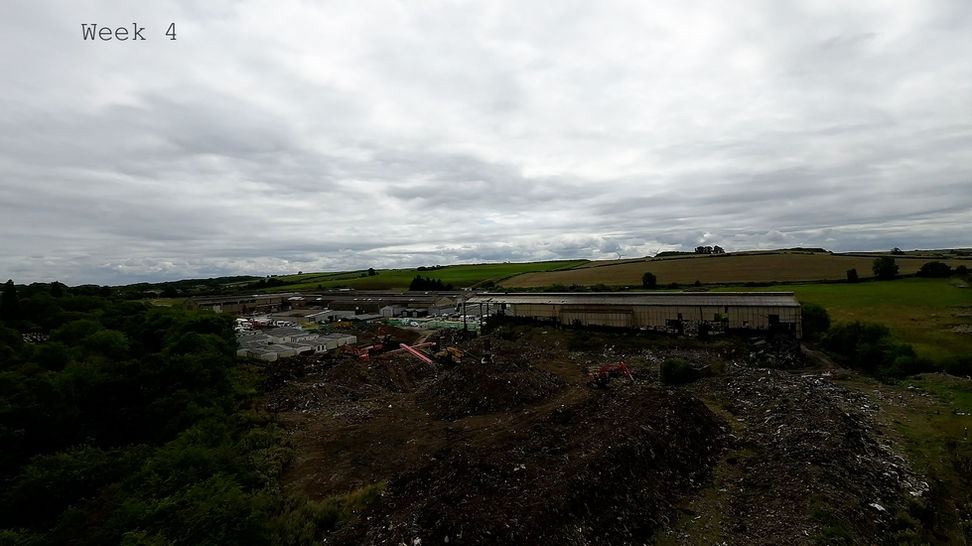
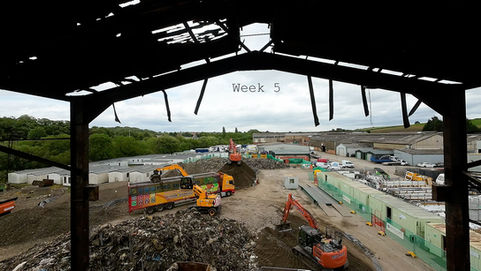
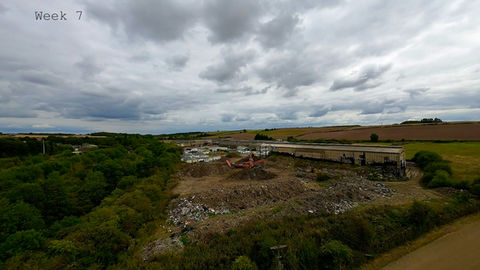
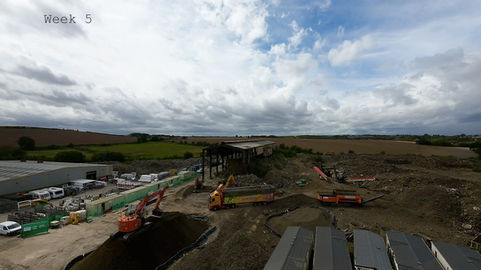
Get in touch today